
It's Time to Walk
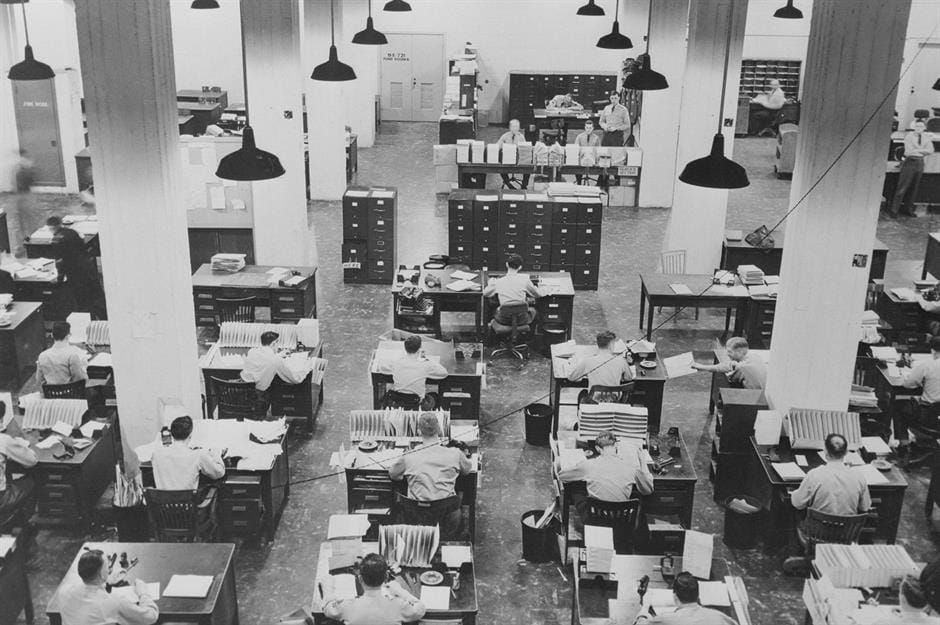
For a century, knowledge work chained us to a desk. Dictation and agentic AI have handed the body back its oldest freedoms: to walk, to rest, to think while moving.
The main points
- Dictation crossed a quality threshold and is now the better input method for knowledge work.
- Agents are absorbing the production layer of work. What is left for humans is direction: framing, judging, deciding.
- The desk, chair, and screen were inherited from factories, paper, and early computers. None of it was designed for verbal, directional work.
- Walking and rest are basic human functions that the desk-bound office suppressed. They have to come back into the workday, not get deferred to morning and evening only.
- The most valuable work in the world is now direction work, and the people doing it are working in environments built for a workload that no longer exists.
The full thinking
I have been thinking about the assumptions underneath how we work, and most of them are wrong now. Not wrong the way an opinion is wrong. Wrong the way a foundation can be wrong, where you build a whole structure on it and the structure is fine until the ground shifts and nothing fits.
Two things shifted under us at roughly the same time. Dictation got good. And agents started doing the production work.
Either one alone is interesting. Together, they change what an office is for.
Start with dictation. I am dictating this post. The reason I can is that the gap between my thinking speed and my output speed finally closed. Typing forced me to linearize every thought before I had finished thinking it. Dictation lets the thought unfold at the speed it actually unfolds, which is messy and circular and not the shape of a sentence. The output is better, the friction is lower, the cognitive cost is roughly half. This is not a small change. This is the input method for knowledge work changing for the first time since the keyboard.
Then the other shift. The work I am doing right now is mostly direction. I frame the problem, I judge the output, I hold the thread across several agents running in parallel, and I decide what is worth doing at all. The production layer, the part where someone types out the document or writes out the code or builds out the model, is increasingly absorbed by the agents. What is left for the human is the part that requires taste, judgment, and the ability to ask the right question.
So most of my work is sitting at a desk, in a chair, in front of a screen, doing work that is verbal, exploratory, and directional. And it occurs to me that none of this was designed for what I am actually doing. The dominant assumptions about knowledge work were inherited from a chain of artifacts, not from human nature. Factories required co-location. Offices borrowed the factory's co-location and added desks for paper. Computers inherited the desk because early hardware required a horizontal surface and a keyboard. Each layer was rational given its constraints. In similarity to the build out of suburban America, each was an engineered and optimized solution rather than one responsive to basic human needs.
Pull that thread and you start to notice what else the office quietly suppressed. Walking, for one. Humans are evolved to walk for hours at a stretch; we are unusually good at it across species. And we do almost none of it during the workday, because the tools demanded a fixed posture. Once that demand goes away, walking comes back. Not just as a break from work. As a mode of work. Some of my best thinking now happens on a trail, talking to Obsidian and Claude through my phone, working through a problem out loud while my body does what bodies are built to do.
The other thing that got suppressed: rest. Not sleep. The middle category. The horizontal pause, the deactivation, the twenty minutes where you stop performing alertness and let the system drop. Direction work runs the nervous system hot in a way production work did not. Typing was repetitive; thinking is not. The cost of holding strategic attention across an eight-hour stretch is higher than the cost of producing for the same hours, and the recovery has to be interlaced through the day, not deferred to evening when you are already empty.
Which means the office, if there even is one anymore, probably looks more like this. Privacy by default, because dictation requires it. A few different postures available without leaving the room. Frictionless access to a walk that is actually worth taking, not a sad loop around a parking lot. And a couch or a chair or some honest place to lie down and stop, several times a day, without apology.
I am not sure what to call this. It is not a coworking space. It is not a coffee shop. It is not a corporate office. It is not a home office, which has its own problems. It might be closer to a private club, or a boutique hotel you live near, or something that does not have a word yet.
What I keep coming back to is that the most valuable work in the world is now the work of direction, and the people doing it are working in environments built for a workload that no longer exists. There is something to build here. I do not know its full shape.
If any of this is hitting something for you, I would like to hear about it. What part of your day feels most wrong against this picture? Where do you do your best thinking now, and what does it cost you to get there? What is missing from your environment that you have stopped expecting anyone to provide?
I am starting to form a thesis. The next move depends on what other people are noticing.